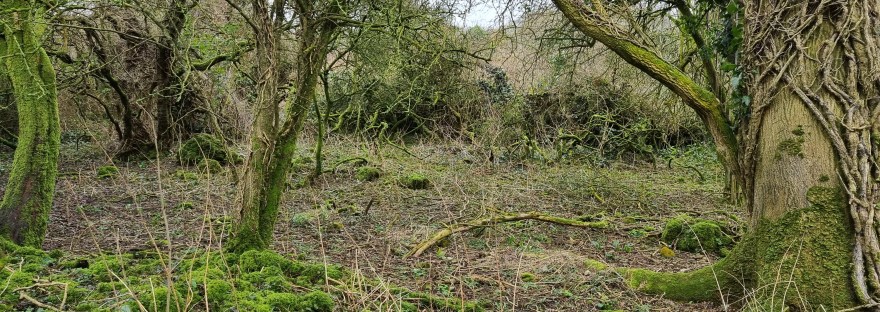
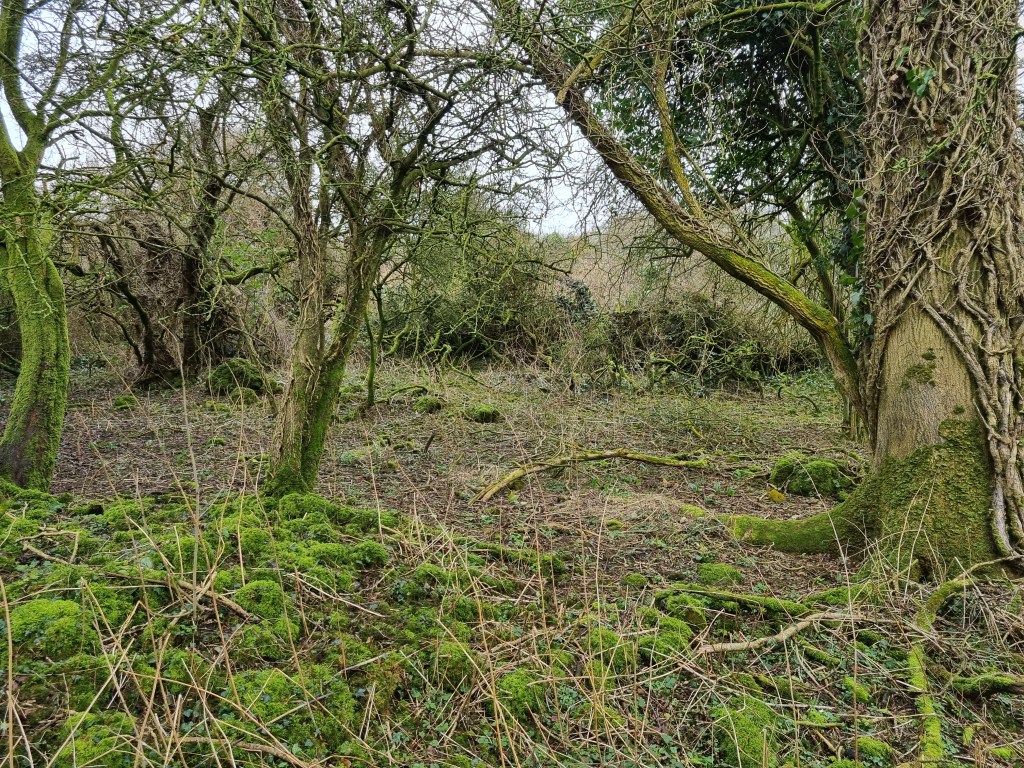
National Heritage Week, one of the busiest times of the year for any Irish heritage practitioner, has come and gone for 2025, and we spent the week delivering events and activities across the country. During that time, we experienced one of the most meaningful Heritage Week events of our career in Kilskeagh, Co. Galway. We’ve worked with the Kilskeagh Heritage Committee since 2023 in their project to uncover the ‘Old Kilskeagh’ church and graveyard site, the majority of which has long been inaccessible due to an extremely heavy woodland overgrowth which has been in place for potentially up to a century. Since 2023, we’ve worked to carefully uncover and identify the church and graveyard, also working with ecologist John Lusby to ensure a balance between the archaeology and ecology of the site.
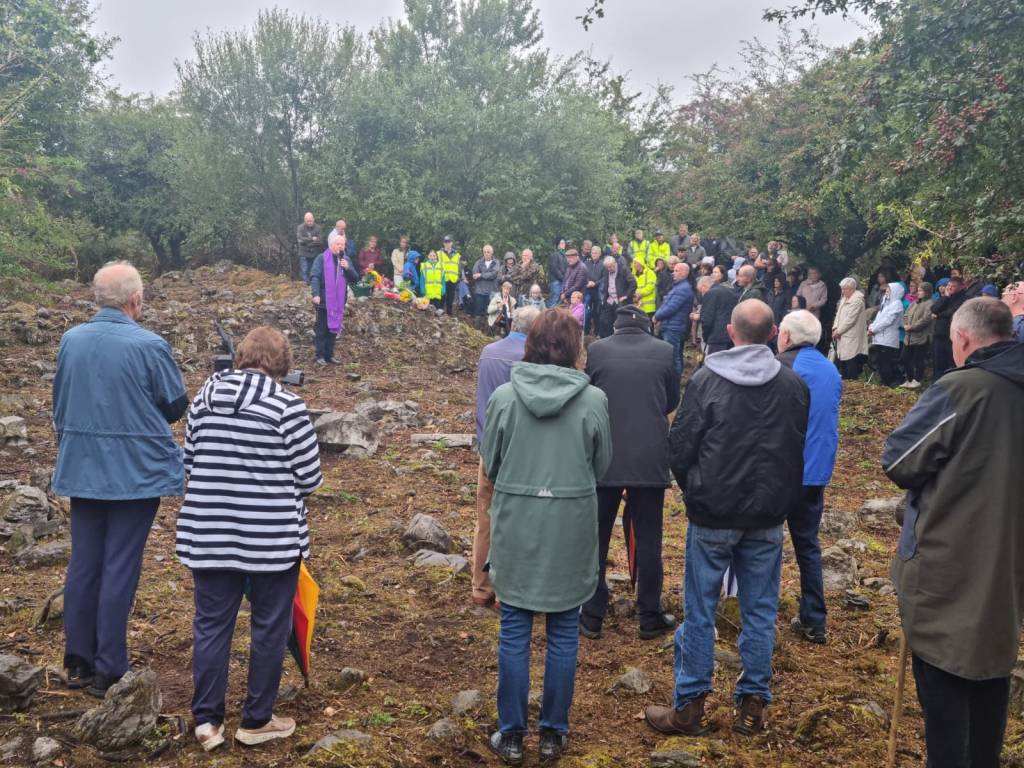
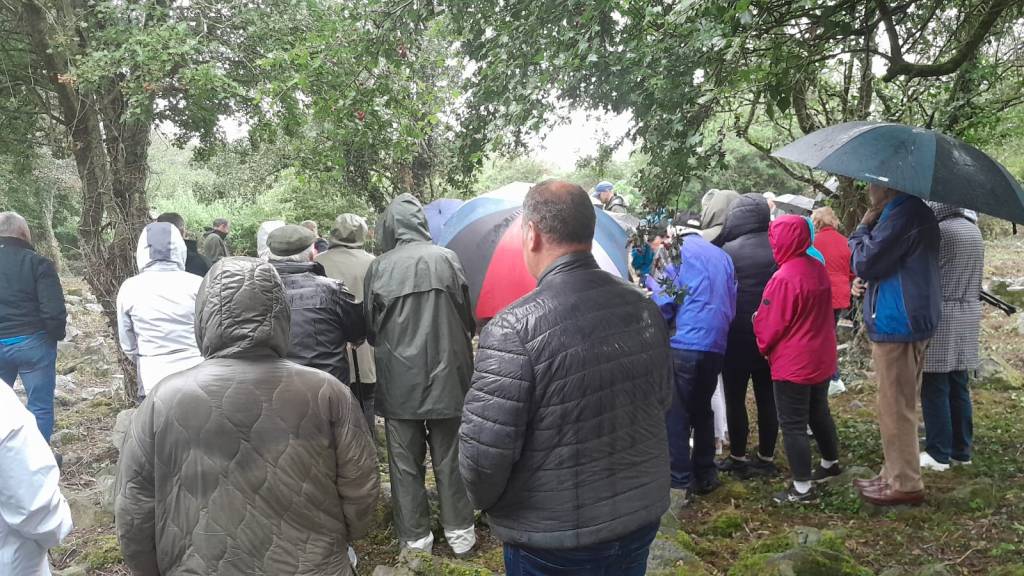
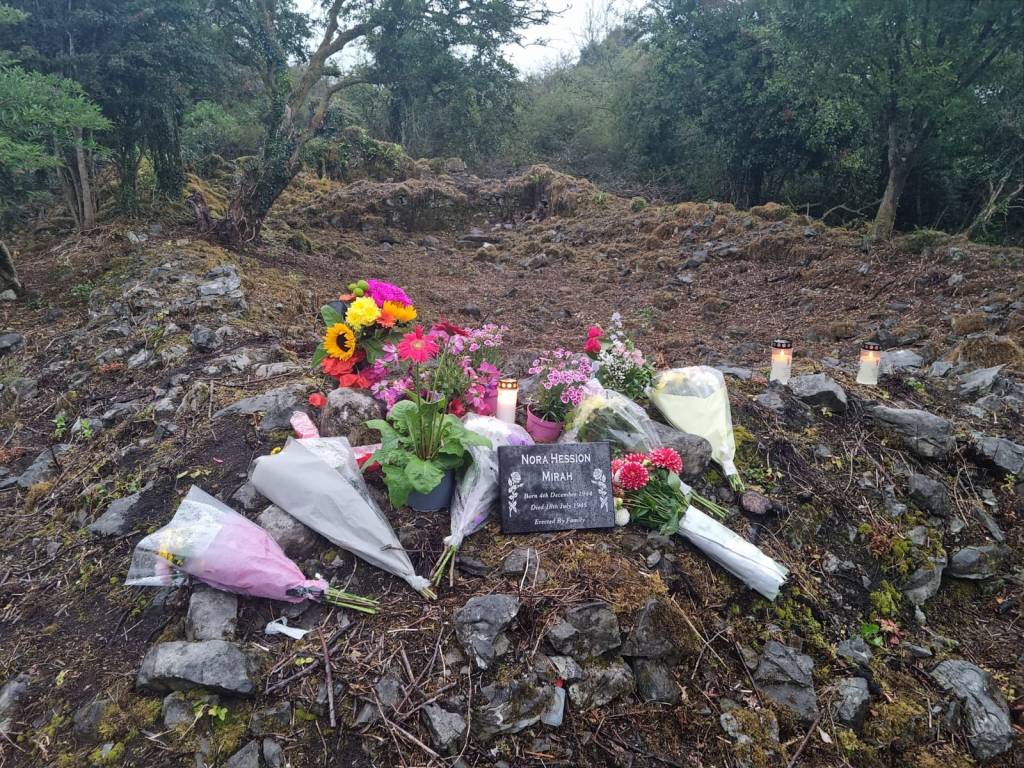
On Friday 22nd August, well over a hundred locals came for a blessing of the graveyard (which was in use by the community up until the twentieth century) and a tour of the important history, archaeology, and ecology preserved there. The parish priest delivered prayers outside of the walls of the former Kilskeagh parish church, dating to the 15th/16th century. The oldest visitors had not been able to access the graveyard for decades, and most of the youngest visitors had been unaware that it had ever existed in the first place. Many members of the community have family members buried in the area – some as close as children and siblings – and it was an emotional and important visit to step foot on the site again and feel that their family had been respected and remembered with the access to and clearance of the site. All of the graves so far (bar one) do not have any grave markers with names or dates, and are simply laid out and marked by limestone slabs and boulders.
Blessing of the Old Kilskeagh Church and Graveyard in Galway by the local parish priest, who is standing outside the ruins of the walls of the medieval parish church dating to the 15th/16th century
The overall site has potentially been in use since the sixth century and has seen multiple layers of use over hundreds of years. However, Friday’s event was a real example that history is not always ancient, and that the past can be much more present in our lives than we often think. Huge credit is due to Kilskeagh Heritage Committee Chairman John Tarpey, who is the powerhouse behind the project, as well as all the community volunteers who donated their time for hours of difficult clearing work over the years. Looking forward to the future of working with this site, which still continues to surprise us as we uncover more!
Crowds gather at the Old Kilskeagh Church and Graveyard site in Galway for a blessing of the formerly lost graveyardCrowds gather at the Old Kilskeagh Church and Graveyard site in Galway for a blessing of the formerly lost graveyardFlowers, candles, and memorial plaques brought to the Old Kilskeagh Church and Graveyard site in Galway by community members whose family members from many generations ago had been interred there
The Old Kilskeagh Church and Graveyard Project was supported in 2025 by The Heritage Council Community Heritage Grant Scheme.
We’ve been working with the Kilskeagh Heritage Committee on an archaeological impact assessment for the future protection and preservation of the site of the old church and graveyard in the townland of Rathfee in Galway (known locally as Kilskeagh Church and Graveyard). Over many years, this site of great importance in the history of the area has unfortunately become overgrown and inaccessible as nature has overtaken the site. The group aim to make the site accessible again and to preserve and respect its significant heritage.
Following their successful application to The Heritage Council Community Heritage Grant in 2023, the Kilskeagh Heritage Committee began their work by commissioning professional archaeological and ecological reports of the site. These reports – an ecological survey and an archaeological impact assessment – will guide the future clearing and works to be carried out, and will ensure that no damage is done to the site. Our video for Heritage Week gives an introduction to the ongoing and future works for the site, the importance of protecting our local heritage and providing accessibility, and our aims for the future in preserving this site for future generations.
We’re running a number of free and inclusive children’s workshops in the month of August in Galway, Laois, Sligo, and Roscommon!
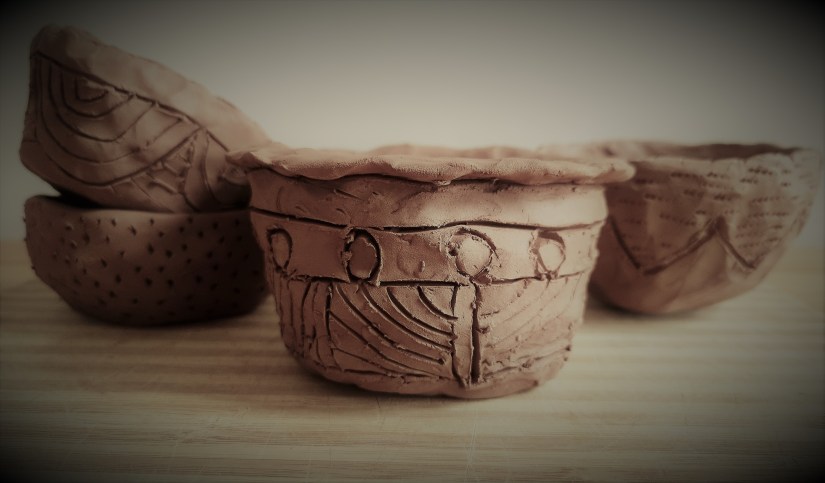
We’re part of the Summer Stars programme for Galway Public Libraries, with free children’s workshops in prehistoric pottery making at 11.30am & 1.30pm in Moylough Library on Thursday 4th August, and at 10.30am & 12.30pm in Dunmore Library on Friday 5th August. Please contact the libraries to book your place, as places are limited. These workshops are kindly supported through the Heritage in Schools programme under The Heritage Council.
For Heritage Week, we’ll be in Laois Libraries for free prehistoric pottery workshops on Wednesday 17th August – at 10am in Mountrath Library, at 12.15 in Abbeyleix Library, and at 3pm in Durrow Library. Please contact the libraries to book your place, as places are limited.
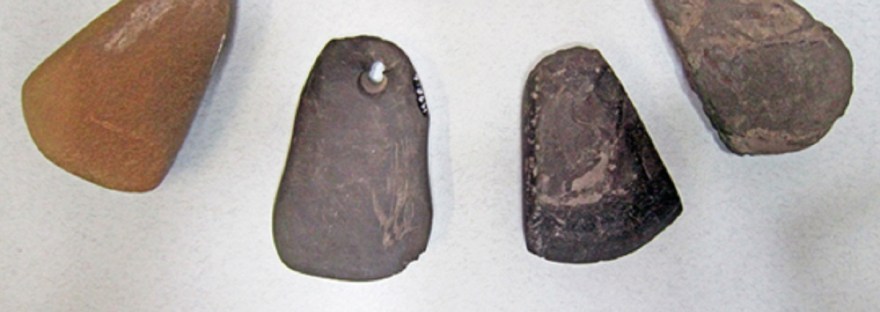
Held by the National Museum of Ireland – Archaeology, the original museum record for these artefacts, numbered 1998:5 – 8, reads: “Hoard of four polished stone axes found in the bog at Td. Runnacocka, Co. Roscommon”.
The record documents a collection of four deliberately deposited small axeheads made from shale, sandstone and limestone, which are likely to date to the Neolithic period and which were discovered “at a depth of c. 10 ft.” during turf cutting.
Figure 1 The Runnacocka stone axe hoard
Hoards
The term hoard refers to a collection of objects which appear to have been deliberately hidden or deposited. Archaeological excavation has shown that hoards of varying object types – ranging from stone and metal objects, to weapons, jewellery and coins – have been present in Europe from at least the Neolithic era up until the post-medieval period.
A number of theories have been suggested for the existence of hoards, whose function and meaning may likely have changed over this long period of time. A large number of the post-medieval coin hoards may have originated as an attempt to safeguard wealth in times of instability. However, the reasons for the presence of prehistoric period hoards have been opened to further interpretation, with theories ranging from their use as ritual or votive offerings, to their possibility as unclaimed caches belonging to merchants or craftsmen. Popular academic theory has promoted the probability that the prehistoric hoards are likely to hold significant symbolic value and ritual meaning through their deliberate choices and placement of objects.
Figure 2 The Runnacocka stone axe hoard
Stone axe hoards
Prehistoric period hoards show a frequent pattern of deliberate choices of placement in wet environments such as rivers, lakes and bogs, as well as in dry ground. Stone axe hoards are commonly discovered in wet environments. This aspect gives credence to their suggested function as votive offerings, as it would have been difficult to retrieve a hoard from such a location if they were originally meant to be temporarily stored and later recovered. At least sixty – seven stone axe hoards are known from Ireland.
The significance of stone axes
Stone axes were in use in Ireland from the Early Mesolithic period until well into the Bronze Age era. They were a common, long-lasting and functional object, which were used mainly as a chopping tool. Further to this, archaeological research has revealed evidence of development over time in their utilisation, appearance and significance, suggesting the importance of axes as both functional and symbolic objects to the people of the past. Examples such as the inclusion of axes as grave goods in burials, the significant placement of axes in monuments and the consumption and value of axes of non-functional size and of non-native stone demonstrate that axes held significant prominence in prehistoric Europe. Specifically, the Neolithic remains of the Breton region show prominent evidence of the consumption of axes made from exotic stone, and a number of the Breton passage tombs show representations of stone axes in their megalithic art.
A possible axe pendant
One of the axeheads from the hoard is particularly unique. The shale axehead (1998:6) is made distinct by a sub-circular perforation through its narrowed hafting butt (See Figure 3). Perforated axeheads are a relatively rare form of artefact. A number of the examples of this artefact type feature this form of perforation located at the butt of the axe. In these cases, the perforation is considered too small to have been used for a shaft, instead potentially forming a means of suspension for an ‘axe pendant’.
Figure 3 Perforated axehead/possible axe pendant (Museum Registration Number 1998:6) from Runnacocka, Co. Roscommon
Following the discovery of the Runnacocka axes in 1998, a contemporary report by the Irish Stone Axe Project noted the rarity and importance of the find. It observed that at that time, of the approximate twenty thousand stone axes known from Ireland, only thirty-nine examples were perforated. Further to this, the Runnacocka perforated axe was one of only fourteen axes which was perforated at the butt. A further reason for the significance of the Runnacocka axe was that it provided the first clear evidence that the perforation of axes was a practice contemporary with the use of stone axes as a tool. It had previously been suggested that the ‘axe pendants’ represented a later modification to an originally functional axe – a possible form of wearing an earlier curiosity during a later chronological period.
Axe pendants may have potentially formed a ritual or representational role in Neolithic society. The megalithic art of the passage tomb on the Breton island of Gavrinis depicts several axes, displaying a domestic public object within the private spheres of the burial chamber. Further to this, it has been noted that the Gavrinis interior slab numbered L6 portrays a pair of perforated axes, which may represent axe pendants (See Figure 4). This may possibly indicate the symbolic and societal importance of this form of artefact, and potentially a wider stylistic or ritual European influence from this period.
Figure 4 – Gavrinis Passage Tomb Slab L6, showing a pair of perforated axes
References
Bradley, R. (1990) The Passage of Arms: An archaeological analysis of prehistoric hoards and votive deposits, Cambridge University Press.
Shee-Twohig, E. (1981) The Megalithic Art of Western Europe, Clarendon Press, Oxford.
N.B. This article was originally an online publication by the author for the National Museum of Ireland during their role in the National Museum Inventory Project, which surveyed and recorded the huge artefact collections gathered by the institution since its first inception. It can also be found at this link.






 Scéal Heritage Consultancy